
Introduction
In the Himalayas, silence is not the absence of sound — it’s the presence of something deeper. It’s the rhythm of wind brushing pine needles, the slow drip of melting snow, the heartbeat of a distant waterfall.
And yet, this land is also a playground of motion — gushing rivers, shifting glaciers, trekking trails, and beating hearts that rise with every climb. It’s here that we learn an essential truth: stillness and motion are not opposites — they are partners.
Through rafting, trekking, and outdoor exploration, the Himalayas gently teach us how to find balance — to be calm in movement and alive in silence.
1. The Himalayas: A Living Classroom of Balance
The Himalayas stretch across northern India like an ancient spine of wisdom. In Uttarakhand, these mountains cradle some of the most spiritual rivers and sacred trails in the world.
Here, nature does not rush — yet everything moves.
- Rivers carve valleys for thousands of years.
- Glaciers move inches each day but shape entire landscapes.
- Trees grow silently while birds dance across the skies.
This natural harmony reminds us that balance doesn’t mean doing nothing — it means doing everything with awareness.
In modern life, we’re constantly in motion — screens, schedules, and speed. But the Himalayas invite us to move differently — with purpose, not pressure.
2. Trekking: The Art of Moving Slowly
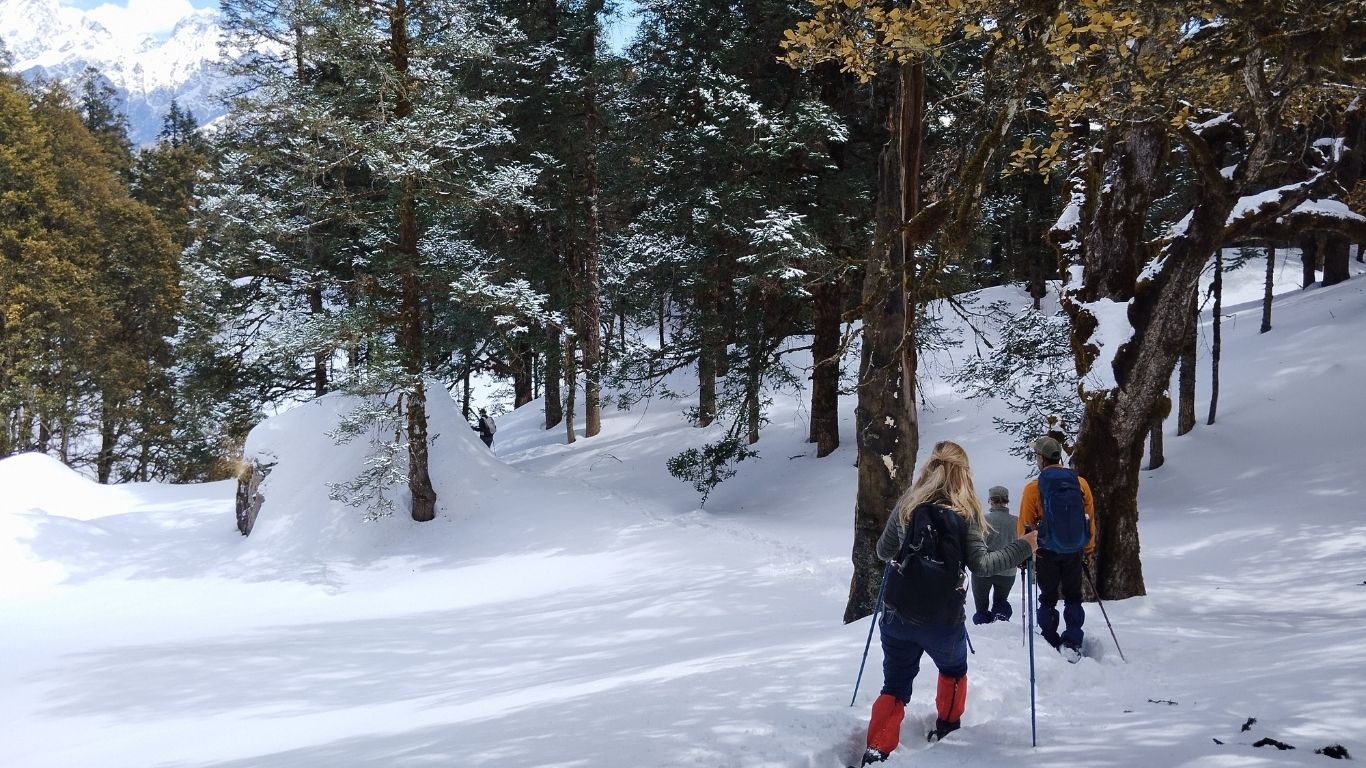
Trekking in Uttarakhand is more than reaching a summit — it’s a meditation in motion.
When you start walking on a mountain trail, your senses heighten. You hear your breath, your heartbeat, your footsteps blending with the sound of nature. This is where adventure turns into awareness.
Popular Treks That Teach Patience and Presence:
- Kedarkantha Trek: A snow-covered paradise where each step teaches perseverance. The sunrise at the summit is a reminder that every climb has light at its end.
- Har Ki Dun: Known as the Valley of Gods, it’s a journey through time, myth, and meadows. You walk beside streams that have flowed since ancient legends were born.
- Dayara Bugyal: A vast meadow that feels endless. The openness of the sky above you mirrors the calm you begin to feel within.
- Kuari Pass: Curzon’s trail that winds through rhododendron forests and oak valleys. A trek that teaches humility — the mountains always stand taller than our ambitions.
Each of these trails whispers the same lesson: slowness is not weakness — it is strength under control.
When you trek, you can’t rush. You learn to listen to your body, match your rhythm with nature, and find stillness in every step.
3. Rafting: The Joy of Trusting the Flow
If trekking teaches stillness in motion, rafting teaches motion within stillness.
In Rishikesh, the Ganga roars with divine energy. You paddle through white rapids that test your courage and teamwork. One moment the raft crashes into waves; the next, you glide through calm water under ancient hills.
That’s life — turbulence and tranquility, both necessary, both beautiful.
Why Rafting Balances the Mind:
- It forces you to trust — the guide, the current, and your own instinct.
- You realize that control is an illusion — sometimes the only way to survive is to surrender.
- Every rapid you cross leaves you lighter, more focused, more grateful.
In between the chaos of rapids, there are moments of deep silence — when the oars rest, the river softens, and all you hear is water meeting stone. That’s where stillness hides — inside motion.
4. How the Himalayas Teach Balance Through Contrasts
The beauty of the Himalayas lies in opposites that coexist perfectly.
| Element | Symbol of Motion | Symbol of Stillness | Lesson |
|---|---|---|---|
| River | Constantly flowing, carving valleys | Calm pools and silent stretches | Move, but don’t hurry. Flow with purpose. |
| Mountain | Erosion, wind, and snow shaping peaks | Eternal presence | Strength is quiet, not loud. |
| Wind | Ever-changing, unpredictable | Whispering breeze | Adapt without losing peace. |
| Traveler | Trekking, rafting, exploring | Pausing, watching sunrise | Action and awareness complete each other. |
Through these elements, the Himalayas remind us that balance is not found — it is practiced.
5. Mindfulness in Adventure: Learning from Nature’s Pace
Every adventure in the Himalayas — whether a trek or a raft — is a mindfulness retreat in disguise.
Here’s how nature subtly trains you to be mindful:
- Breathing with altitude: The higher you go, the deeper you breathe. You learn to value every inhale.
- Listening to silence: The quieter you become, the more you hear — from birds, trees, rivers, and even your own thoughts.
- Facing discomfort: Cold nights, sore legs, and uncertainty strip away the ego, leaving behind clarity.
- Witnessing sunrise: Watching the first light on snow peaks fills you with gratitude and awe — emotions that modern life rarely allows.
Mindfulness isn’t about sitting still — it’s about being fully present, whether your feet are on the trail or your raft is bouncing through rapids.
6. The Science of Balance in Adventure
The Himalayan environment naturally stimulates both the sympathetic and parasympathetic nervous systems — meaning, it balances adrenaline with calm.
- Trekking increases endorphins and serotonin, reducing anxiety.
- Rafting releases dopamine, giving excitement and focus.
- The high altitude air improves oxygen flow, leading to mental clarity.
So, every Himalayan adventure is not only a spiritual reset but also a scientific balance for your brain and body.
It’s why so many travelers return saying, “I came back calmer.”
7. Blending Adventure with Reflection
If you truly want to chase stillness in motion, don’t separate adventure from reflection. Combine them:
Day 1–2: Raft the Ganga from Shivpuri to Rishikesh. Let the river cleanse your thoughts.
Day 3–6: Trek through Kedarkantha or Dayara Bugyal. Let the mountains fill the space the river emptied.
Day 7: Meditate or relax by the riverbank. Watch the sunset. Let stillness flow through you.
This combination of action and reflection creates perfect balance — body challenged, mind quieted, soul refreshed.
8. Finding Inner Balance Beyond the Trip
When you return from the Himalayas, something within you changes.
- You walk slower, but think clearer.
- You speak less, but mean more.
- You seek less chaos, but appreciate movement.
This is what the Himalayas gift you — not just memories, but a new rhythm for life.
You learn that balance isn’t about staying still; it’s about moving without losing yourself.
9. Responsible Adventure: The Balance We Owe Nature
Balance is also about giving back. The Himalayas teach respect — and that lesson must continue through eco-friendly travel:
- Carry reusable bottles and avoid plastic.
- Stay in eco-camps or homestays.
- Respect wildlife, local culture, and sacred sites.
- Leave trails cleaner than you found them.
True adventure is not conquering mountains — it’s coexisting with them.
10. The Final Lesson: Stillness Is Movement Seen Differently
Stand on a mountain ridge in silence, and you’ll feel the wind move around you. Sit beside a river, and you’ll feel its quiet strength beneath the surface.
The Himalayas don’t teach through words; they teach through presence.
They whisper —
“You don’t have to stop moving to be still.
You only have to move with awareness.”
And that’s the secret of balance — not escaping motion, but finding peace inside it.
Conclusion: What the Himalayas Want You to Remember
When you trek through misty forests or raft through wild rapids, you are not escaping life — you’re entering it more deeply.
In Uttarakhand’s sacred landscapes, adventure becomes meditation. The mountains teach patience. The rivers teach surrender. And together, they remind us that balance is not a destination — it’s a way of traveling.
So the next time you feel overwhelmed, remember the rhythm of the Himalayas:
Breathe. Flow. Pause. Move again.
That’s how you chase stillness in motion — and find yourself where earth touches the sky.