
Introduction
Uttarakhand — the “Land of the Gods” — is where rivers are born from snow-clad peaks and the clouds rest on the shoulders of the Himalayas. Here, rafting and trekking are not just adventure sports; they are two sides of the same spiritual journey.
When you raft down the mighty Ganga or trek across the alpine meadows of the Garhwal Himalayas, you begin to understand a deeper truth — that the river and the sky are always connected. One flows, one floats, yet both teach us how to move with grace and purpose.
This guide takes you through the soulful connection between rafting and trekking in Uttarakhand — their routes, seasons, experiences, and the hidden lessons they carry for those who listen closely to the voice of the mountains.
1. The Sacred Geography of Uttarakhand
Uttarakhand lies in the northern Himalayas and is divided into two main regions — Garhwal and Kumaon.
- The Garhwal region is famous for the Ganges, Gangotri Glacier, Kedarnath, and Rishikesh.
- The Kumaon region is home to Nainital, Pithoragarh, Munsiyari, and lush green valleys.
This land is shaped by the union of rivers and mountains. The rivers — Ganga, Alaknanda, Mandakini, Bhagirathi, Pindar, and Tons — are born in glaciers thousands of meters above sea level. The mountains cradle these rivers, creating an ecosystem that is both wild and sacred.
It’s this geographical connection that makes Uttarakhand the perfect place where the river meets the sky — literally and spiritually.
2. The Thrill and Tranquility of Rafting in Uttarakhand
Rafting in Uttarakhand, especially in Rishikesh, is one of India’s most famous adventure experiences. The river Ganga here offers everything — from gentle ripples to roaring Grade IV rapids.
Best Rivers for Rafting:
- Ganga River (Rishikesh): Ideal for beginners and intermediate rafters. Sections like Shivpuri, Brahmpuri, and Kaudiyala offer rapids with varying intensity.
- Alaknanda River: A thrilling stretch known for its strong current and scenic surroundings.
- Tons River: One of the toughest rafting routes in India, suited for seasoned adventurers.
Best Season for Rafting:
- March to June: Snow melts and rivers swell with life. The rapids are perfect and the weather is pleasant.
- September to November: Post-monsoon clarity makes it another great window.
- Avoid the monsoon months (July–August) when rivers become unpredictable.
What Makes Rafting in Uttarakhand Special?
- The Ganga is not just a river; it’s a symbol of purity and flow.
- Rafting here is a blend of adrenaline and spirituality — as you float past ancient temples, white sand beaches, and jungle-covered cliffs, you feel both small and infinite.
- It’s an activity where you face your fears and learn to move with the current, not against it.
3. The Peace and Power of Trekking in Uttarakhand
If rafting is about flow, trekking is about grounding. Trekking in Uttarakhand is like walking through chapters of a living story — where each forest, meadow, and peak reveals a lesson.
Popular Treks:
- Kedarkantha Trek (12,500 ft): Best for beginners. Known for sunrise views, snow-clad meadows, and pine forests.
- Har Ki Dun Trek: A valley steeped in mythology, with views of Swargarohini peaks. Perfect blend of nature and culture.
- Dayara Bugyal: A vast meadow at 11,000 ft — one of the most beautiful alpine pastures in India.
- Brahmatal Trek: A frozen lake trail offering panoramic views of Mt. Trishul and Nanda Ghunti.
- Kuari Pass Trek: Also known as the Curzon Trail, famous for Nanda Devi and Dronagiri peaks.
Best Season for Trekking:
- March to June: Ideal for lush meadows, flowers, and clear skies.
- September to November: Post-monsoon clarity, crisp air, and golden autumn colors.
- December to February: Great for snow treks like Kedarkantha or Brahmatal.
Why Trekking Here Feels Different:
- You walk on trails once used by sages and shepherds.
- Every step reconnects you with silence — a kind that exists only in the Himalayas.
- The trek is not about reaching the top; it’s about realizing how small and grateful we are in the presence of nature.
4. When the River Meets the Sky: The Connection Between Rafting and Trekking
At first, rafting and trekking seem opposite. One is wild, wet, and fast. The other is slow, quiet, and steady.
But in Uttarakhand, they become one continuous rhythm — the heartbeat of the mountains.
Here’s how they connect:
🌊 Flow and Stillness
Rafting teaches surrender — to trust your team, your guide, and the current.
Trekking teaches patience — to listen to your breath and keep walking even when it’s steep.
Together, they balance action and awareness.
🏔️ Journey Through the Same Elements
The rivers you raft on are born from glaciers you trek near.
When you stand on a high ridge and see a silver thread of a river below, you realize — the water that tests your courage once rested beneath your feet as snow.
🌿 Nature as a Teacher
Both adventures cultivate respect for nature. You begin to understand how fragile ecosystems are — how litter, noise, or careless travel can disturb the delicate balance.
Adventure turns into awareness.
🕉️ Spiritual Awakening
The Himalayas have always been home to yogis, monks, and seekers. Rafting on the sacred Ganga or trekking to a remote alpine lake often becomes a meditative act — a conversation with yourself.
5. Combined Adventure Ideas (Rafting + Trekking)
If you truly want to experience Uttarakhand’s dual spirit, combine both activities in one journey.
Option 1: The Rishikesh Weekend Soul Trip (2–3 Days)
- Day 1: Rafting on the Ganga from Shivpuri to Rishikesh.
- Day 2: Short hike to Kunjapuri Temple for sunrise views over the Ganga valley.
Option 2: Garhwal Adventure Circuit (5–7 Days)
- Raft the Alaknanda or Ganga stretch.
- Continue with a moderate trek like Kedarkantha or Har Ki Dun.
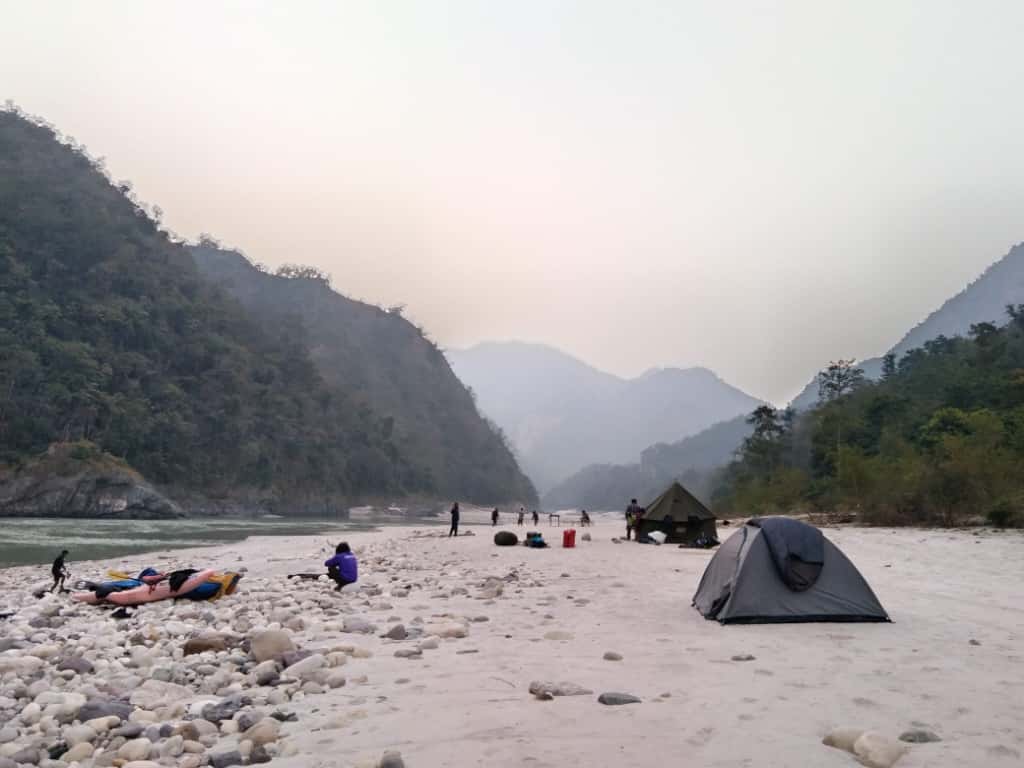
- Experience riverside camping and mountain sunrise in the same week.
Option 3: Ultimate Himalayan Expedition (10–12 Days)
- Begin with rafting in Rishikesh or the Tons River.
- Proceed to high-altitude trek like Kuari Pass or Brahmatal.
- Explore local villages, forest trails, and river valleys along the way.
6. Responsible Travel and Eco Awareness
Adventure in Uttarakhand is a privilege, not a right. The mountains and rivers are living ecosystems that need care and respect.
Here’s how travelers can make a difference:
- Carry your waste back — never leave plastic or cans behind.
- Avoid detergents or soaps near riverbanks.
- Support local guides, homestays, and small businesses.
- Travel in small groups to reduce impact.
- Respect local customs and traditions — many rivers and peaks are sacred.
When you respect the Himalayas, they reward you with clearer skies, calmer waters, and deeper peace.
7. The Science and Spirit of “Where the River Meets the Sky”
The title is not just poetic — it’s scientific and spiritual.
- The river meets the sky through the hydrological cycle — evaporation, condensation, and precipitation. The snow you trek on becomes the river you raft through.
- Spiritually, it symbolizes unity of motion and stillness — the river flows while the mountain stands still, yet both complete each other.
It reminds us that everything in nature is interconnected — and so are we.
Conclusion: The Journey Within
To raft on the Ganga is to trust the flow.
To trek in the Himalayas is to trust your steps.
Together, they mirror life itself — unpredictable, beautiful, humbling.
When you watch the sun set behind snow peaks and hear the river roar in the valley below, you’ll understand the essence of Uttarakhand — the place where the river meets the sky.
Whether you come for thrill, peace, or transformation, this land will give you all three — and something more: a quiet reminder that adventure is not out there, it’s within you.